Automate CRM Updates with AI
Turning a slow, error-prone AI setup into a guided flow that lifted adoption of a top Sybill revenue driver by 83%
Overview
One of Sybill's biggest bets is using AI to remove a sales rep's most tedious daily task: manually updating the CRM after every call. It's a top revenue driver and a key competitive differentiator, yet adoption was stalling. The setup was so complex that many teams dropped off before ever reaching value, leaving revenue on the table on the exact feature meant to pull customers up into the paid tiers.

I led the diagnosis and end-to-end redesign of that setup. By reframing the core mental model and rebuilding the flow around it, I lifted feature adoption by 83% and helped convert more customers onto Sybill's paid Business plan.
My Role
Sole designer leading end-to-end design
Time
2025
Team
Product Manager
Frong End Engineer
Back End Engineer
AI Engineer
Duration
2 months
my contribution
👫  Led cross-functional partners to change direction by reframing the core mental model.
🎨  Defined foundational components for Sybill's AI feature set and expanded the design system.
🛠️  Partnered with engineering to solve technical constraints and design for trust in AI.
impact
🎉
83% increase in paid-org adoption
within 5 months after launch
🎉
58% more existing customers activated
getting the value they'd previously skipped
🎉
77% faster setup
45 → 7 minutes
🎉
Drove new revenue two ways
  • Stronger SLG demos created on-call “aha” moments that converted prospects to the Business plan
  • Existing customers who finally adopted Autofill expanded seat counts
EMPHASIZE
The real problem wasn't the feature. Teams never finished setup.
Low adoption directly suppressed the revenue this feature was meant to drive into Sybill's paid tiers.
To diagnose, I did research by talking to customers, analyzing user behaviors, and worked closely with the CS and sales teams to see where users actually got stuck.
The team knew adoption was low but not why. The early assumption was a functionality gap, that the feature lacked something teams needed.
Research pointed somewhere other than functionality: the real blocker was the drop off during setup, so the feature never got the chance to deliver value.
From user research, we discovered the following friction points during feature set up :
😵‍💫
High-effort setup
Setting up required extensive manual work to create and configure CRM fields in Sybill.
😨
Error-prone configuration
Every field had to be mapped and typed manually, so a single mismatch could break the sync.
😕
Prompt engineering burden
Each field needed a custom AI prompt to get team-specific outcome, forcing busy users to act like prompt engineers.
😵
Lack of activation
Users landed on a bare settings page with no guidance on what to set up, or that setup had even started.
PROBLEM SOLVING
Driving team alignment on solving the root cause
Two realities shaped what "solved" had to mean here:
🎯
Project goal
Make setup fast, guided, and effortless enough that any user could finish it, turning a drop-off point into a smooth path to value and a stronger moment in Sybill's sales motion.
My hypothesis:

The mapping mental model is the root cause
Setup forced users to recreate their CRM fields in Sybill and manually map each one back, technical, repetitive, and easy to get wrong.
✔️
An import mental model would fit how users already think
Instead of rebuilding their CRM, users would pull it in as-is, letting the system do the mapping and eliminating the errors entirely.
My challenge: The team was skeptical the shift was worth it, and building it would take real engineering effort.
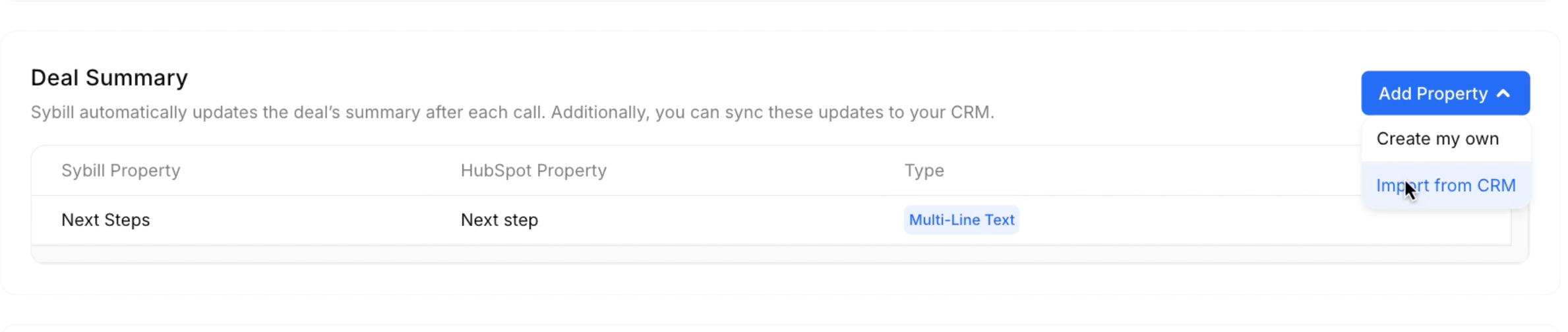
I convinced our PM to run a small live experiment: add a secondary "Import from CRM" option and see whether users reached for it on their own.
They did, unprompted, in session after session. That signal was enough to align the team and redefine the redesign around importing, not mapping.
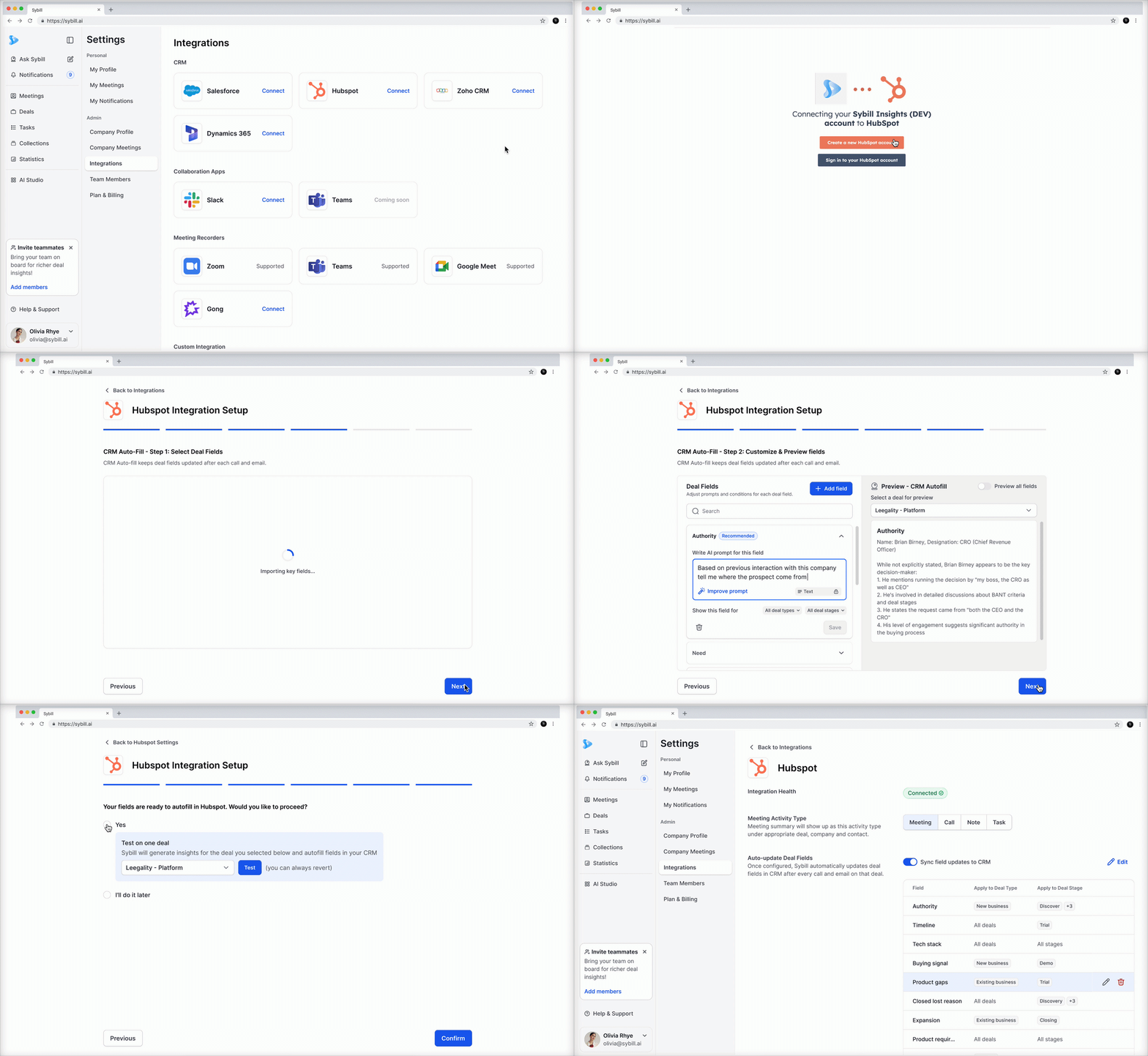
With the direction set, I mapped the full setup user flow end to end, making sure it fit cohesively into the product, as well as flows for ongoing integration health, maintenance, and the edge cases users would eventually hit.
SOLUTION
A guided setup that does the hard parts for users
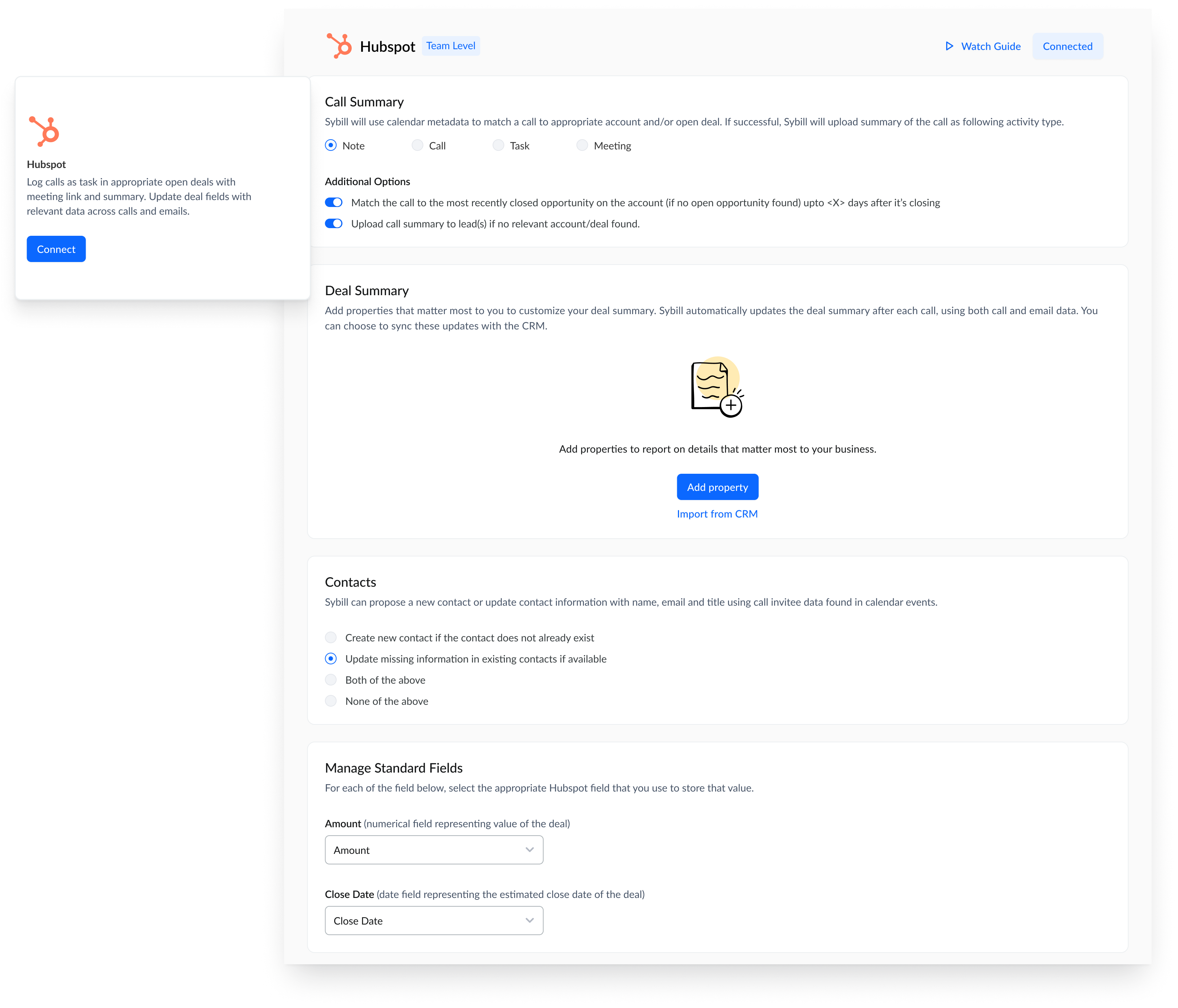
A guided, step-by-step flow replaced the bare settings page, activating users by making it clear what to set up and where they were in the process.
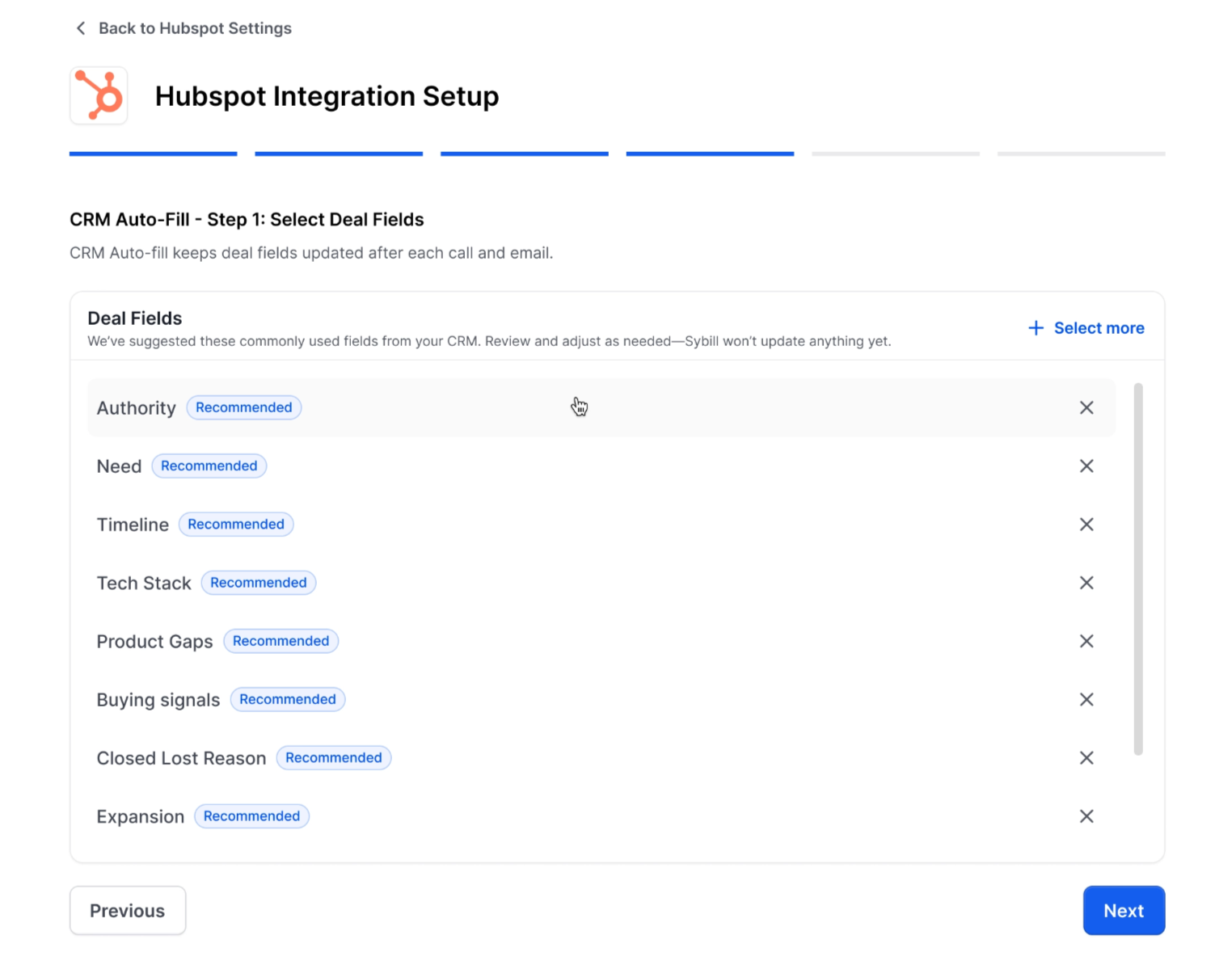
Bulk import that eliminates manual setup and errors
Instead of recreating and mapping fields by hand, AI scans the team's CRM and imports the right fields in bulk, already matched, so the two biggest sources of effort and mistakes simply disappear.
Working with engineering, I narrowed the import to an AI-prioritized set of 10 to 30 fields, keeping load times fast without sacrificing coverage.
Team-tailored prompts that skip the prompt engineering
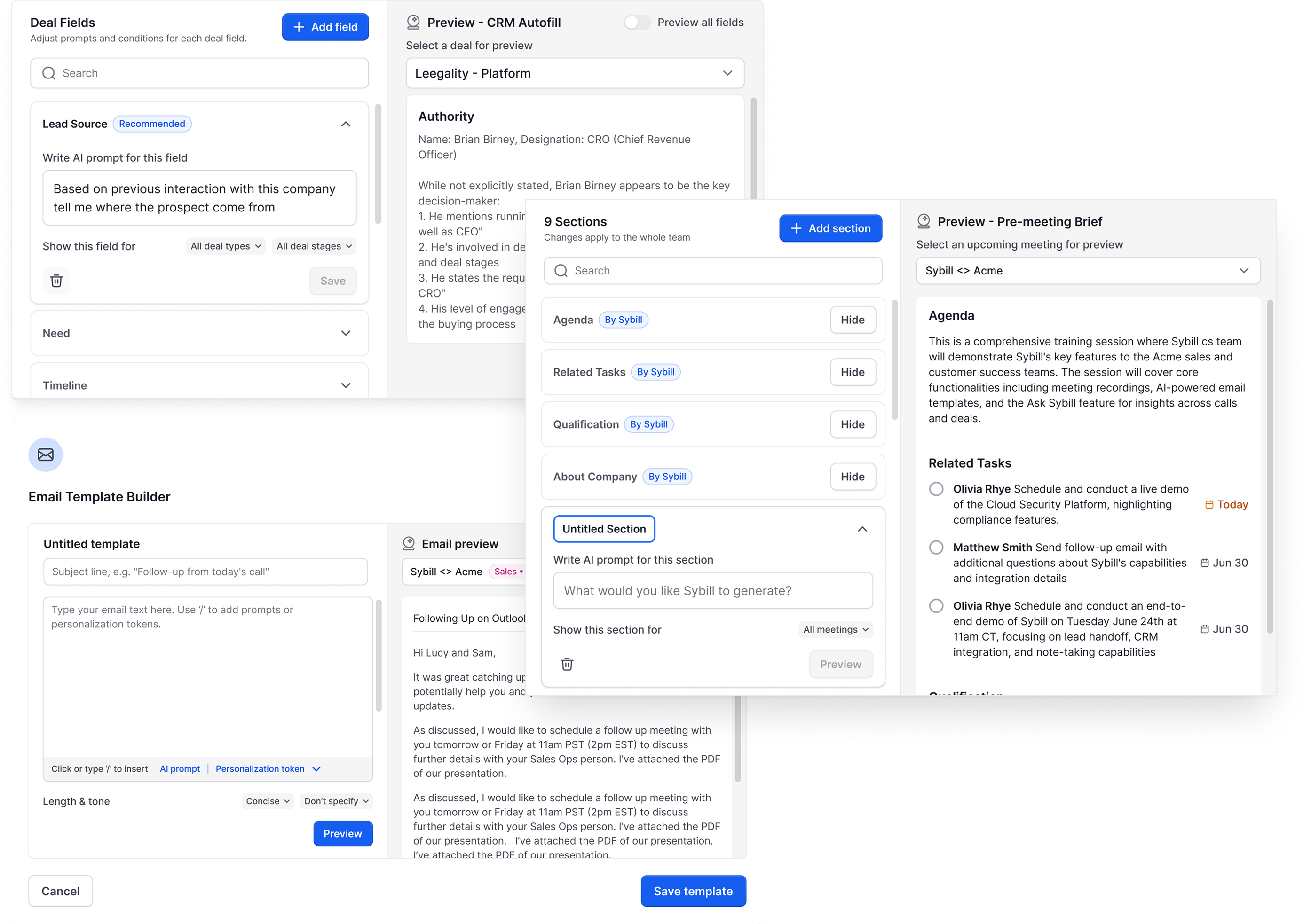
Sybill reads a team's past CRM entries and pre-writes each field's AI prompt in their style, so users get high-quality output out of the box without ever writing a prompt.
A reusable pattern for AI configuration across Sybill
Sybill AI is highly customizable, and every prompt requires visibility into how the AI will respond. I designed a configuration pattern that includes built-in previews, allowing users to see the AI output and fine-tune prompts with confidence. This pattern has since become a reusable foundation for other AI features across the product.
POST-LAUNCH CHALLENGE
The last barrier wasn't setup, it was trust
We rolled the new flow out to trial prospects, expecting it to convert. Instead, users finished every setup step, then hesitated at the last one: turning on sync.
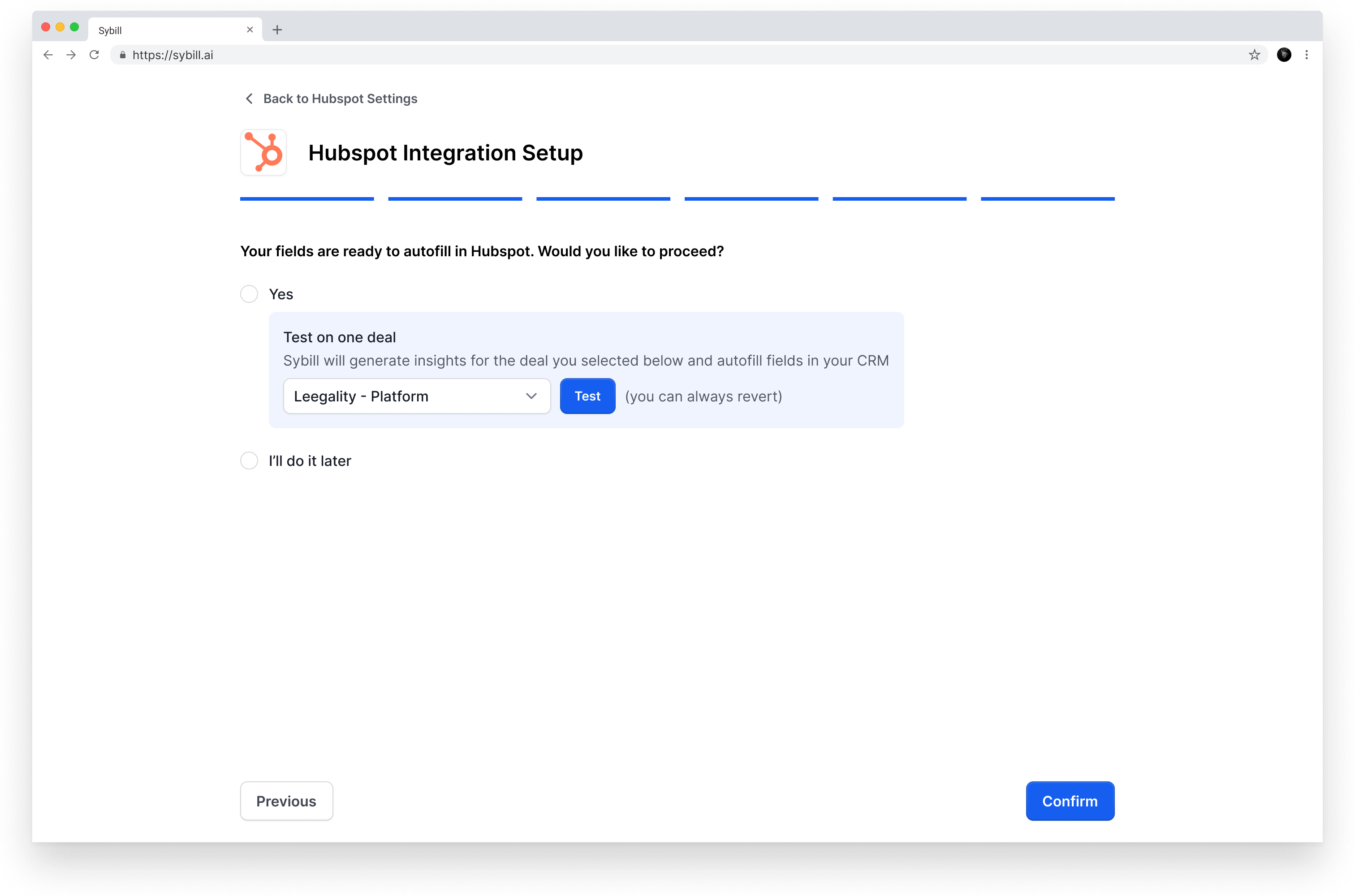
The reason wasn't the setup anymore. Users weren't willing to let AI write to their CRM, their source of truth, without first seeing it work on real deals. A preview of prompts wasn't enough; they needed proof.
So I designed a single-deal test flow. Users pick one deal, watch the AI output sync to their CRM live, and verify it before committing across their pipeline. Validating on real data with almost no risk turned hesitation into a "yes".
outcome
The redesign turned a 45-minute technical setup into a guided flow anyone could finish in about 7 minutes, live, in a sales demo. Setup stopped being the thing that lost deals and became part of what closed them.
💖
“Having this Sybill being able to sync fields directly into a CRM is extremely valuable. It's a real time saver, and I mean, I think it's been a game changer for us.”
— Janet C. @TriggerPS
next step
Sustain trust beyond onboarding. Give users a lightweight way to review and correct AI-written fields over time, so confidence holds as usage scales, and feed corrections back into accuracy.
Learning
Like what you see?
📩 Contact me for more project details.
Want to check out more projects?